
Men · Hair loss
Receding hairline and crown: understand the cause first
In most men, hair loss that starts at the hairline or the crown is hereditary. It cannot be cured, but it can be treated with medical follow-up. At La Clínica del Pelo we examine your scalp with SmartHair and explain what is happening and what makes sense in your case.

What you are noticing has an explanation
It rarely starts all at once. It is usually a detail that keeps coming back:
- Your hairline looks higher in photos than it used to.
- Under overhead light, the scalp starts to show at the crown.
- Your hair feels thinner and does not style the same way.
- The cap went from a habit to a way of not thinking about it.
In most men the cause is hereditary: it is called androgenetic alopecia. Over the years, certain hormones weaken the follicle and the hair grows back finer and finer, until in some areas it stops growing. It is common and it is not your fault.
It is not the only possible cause. Stress, an illness, changes in diet or some medications can also play a part, and they sometimes combine. That is why we do not recommend anything before understanding what is happening in your case.
How we approach it
We use the same six-step method with every patient. Dr. Irene Thuel decides what to use in each step, based on what she finds in your consultation:
- Understand why it is falling out: assessment with SmartHair, our exclusive hair assessment system, and lab tests or a genetic test if needed. This is the most important step.
- Slow the shedding: address what is weakening the follicle.
- Stimulate growth: help the hair you still have grow stronger.
- Nourish and regenerate: in-clinic sessions such as mesotherapy and photobiostimulation, together with your exclusive compounded formulation for home.
- Consider a transplant, only if needed: when an area can no longer recover.
- Maintain the results: hereditary hair loss is controlled, not cured. Maintenance and follow-up visits sustain the result.
Patient cases
Two men who started with non-surgical Hair Restoration. Each pair is the same person, without faces, with their authorization and no retouching of the hair.
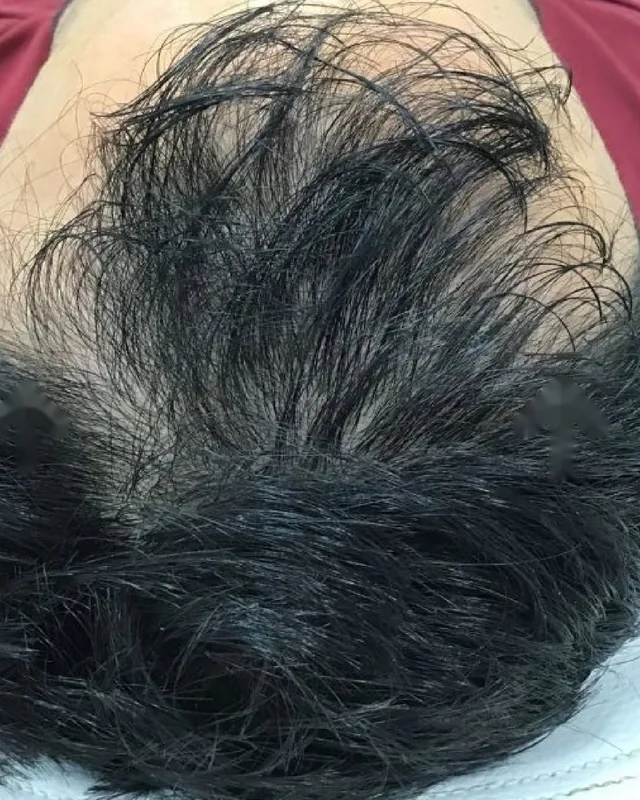 Before
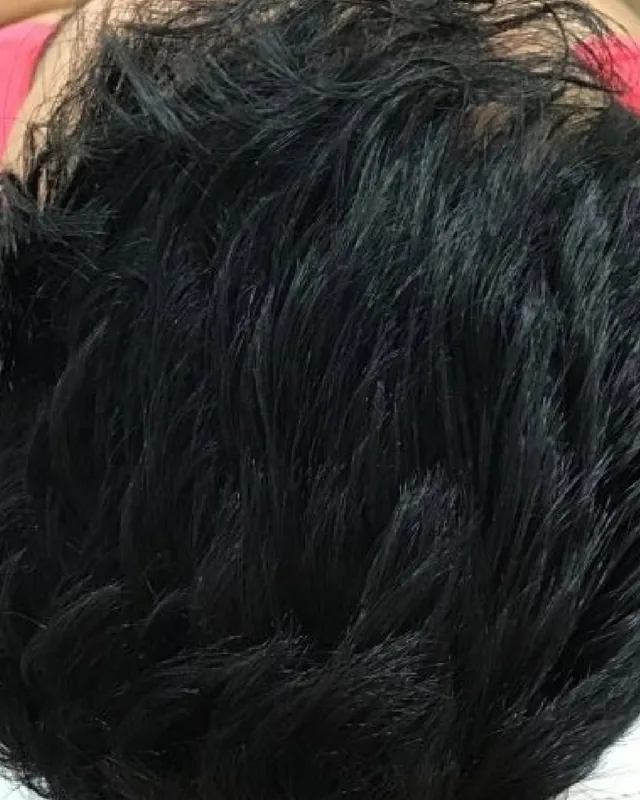 After
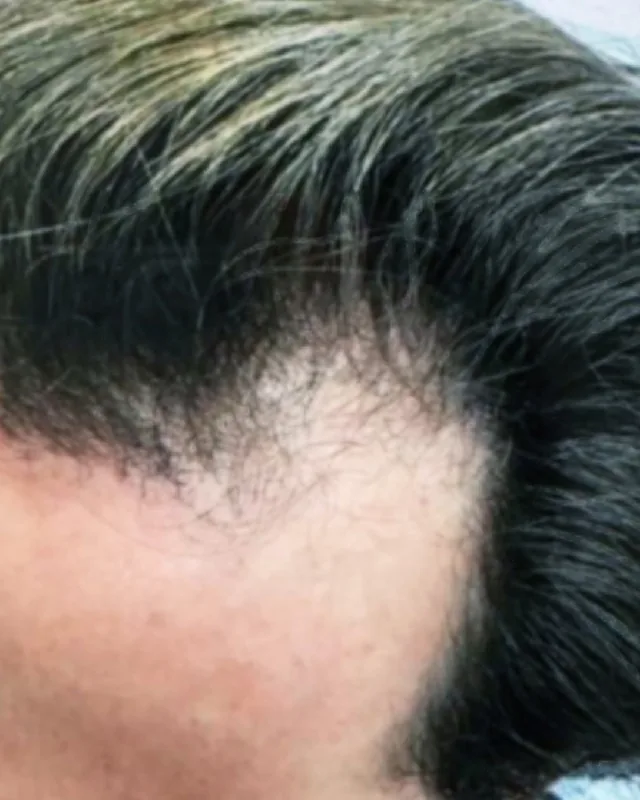 Before
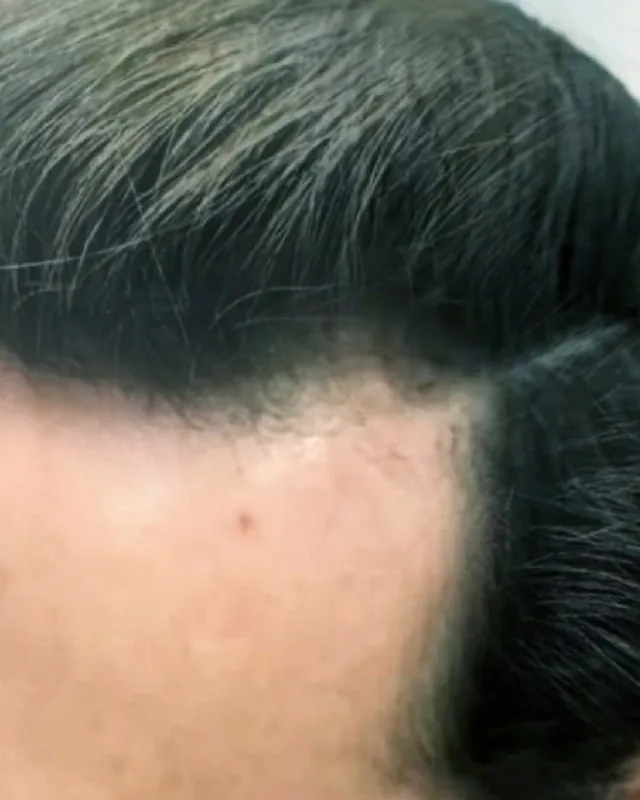 After
Every case is different. Your treatment plan or medical procedure is designed for you. Changes appear gradually and timing varies from person to person.
What about a transplant?
Many men arrive thinking about a transplant and find out they can start without surgery. A hair transplant, also called a hair graft or implant, is only considered when an area can no longer recover and the donor area allows it. Even after surgery, your own hair still needs treatment. At your consultation we tell you clearly whether it is an option for you.
Your consultation
- It is done by Dr. Irene Thuel, code MED10355, by appointment at Centro Médico Nunciatura, San José, Costa Rica.
- We examine your scalp with SmartHair: density, thickness and affected areas.
- We explain the likely cause, your options and how we will measure progress.
- The consultation costs US$100, VAT included. The full amount is credited to your treatment or medical procedure if you pay for it and schedule it the same day or within the following seven calendar days.
Questions about the hairline and crown
Can a receding hairline be treated without surgery?
It depends on the cause and on how many active follicles remain in the area. Many men start with non-surgical Hair Restoration. If an area can no longer recover, we consider a transplant. Only the consultation can determine it.
Does wearing a cap cause hair loss?
No. A cap does not damage the hair root, unless it is very tight for many hours. What is worth avoiding is using it to hide a change that is worth checking early.
When are changes noticeable?
It does not happen overnight: hair grows slowly and everyone responds differently. It is usually a matter of months, not weeks. At your consultation we explain what to expect in your case and how we will measure progress at follow-up visits.
If my father or grandfather lost their hair, will the same happen to me?
Not necessarily in the same way, but heredity does play a role. That is why it is worth looking into when you notice the first changes, to understand the cause and decide with information what to do.